
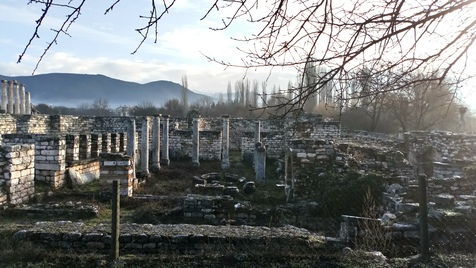
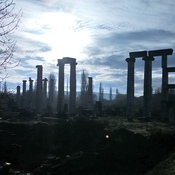
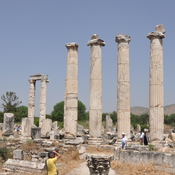
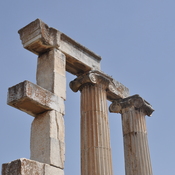
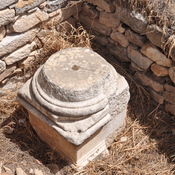
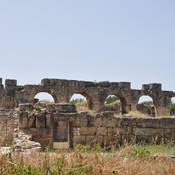
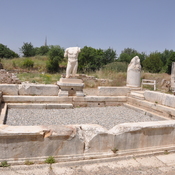
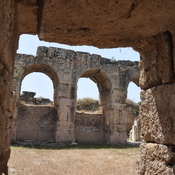
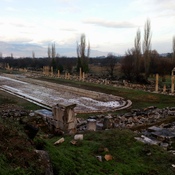
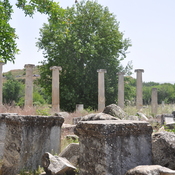
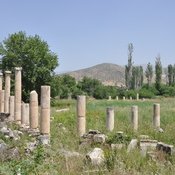
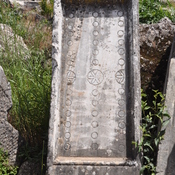
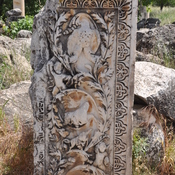
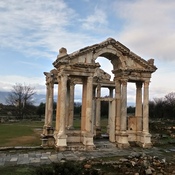
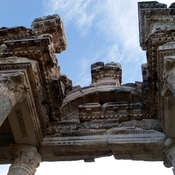
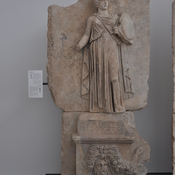
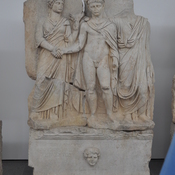
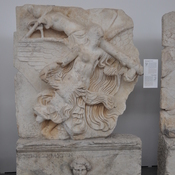
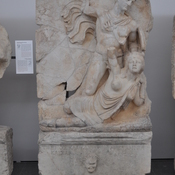
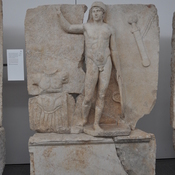
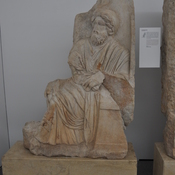
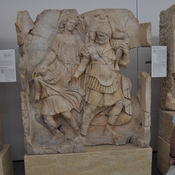
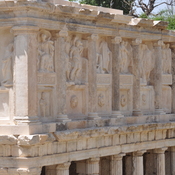
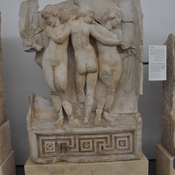

During the Imperial period, the site of the Bishop’s Palace was occupied by public buildings, probably tied to the functions of the Bouleuterion and North Agora. "It was most likely used in the Late Roman period as a high-status residence with strong representative character, possibly belonging to an elite family, a high-ranking official, or an important figure connected with provincial administration 1."
- Aphrodisias Excavations Project https://aphrodisias-excavations.com/bishopspalace/
- Ekrem Akurgal, Ancient Civilisations and Ruins of Turkey: From Prehistoric Times Until the End of the Roman Empir, II ed., Istanbul 1970, pp. 171-175
- John Edward Boyer, The Roman Tetrakionion at Ancient Aphrodisias: An Analysis, Documentation, and Reconstruction Program, 1995 - https://www.academia.edu/24882107
- Michelle Berenfeld, The Triconch House and the Predecessors of the Bishop's Palace at Aphrodisias, AJA vol 113, 2 , 2009, pp.203-229 - https://www.academia.edu/24882107
- Lale Özgenel, Housing in Late Antiquity. From Palaces to Shops, Late antique archaeology, Volume 3.2, Leiden..., Brill, 2007, pp. 241-24