Er zijn nog geen Nederlandstalige annotaties. Hier volgen annotaties in het Engels.
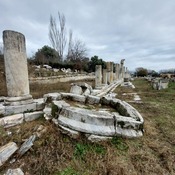
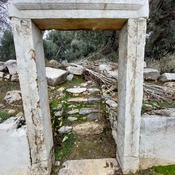
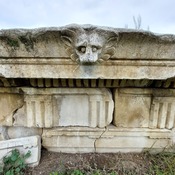
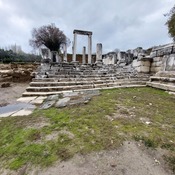
The earliest recorded reference to goddes Hecate in Greek literature is written the VIII century BC in Theogony by Hesiod. Lagina sanctuary was connected with Stratonicea by the 'sacred road' that started at the northern gate of the city. The Hecateion a pseudodipteral with a single peristyle erected in the second century BC stood in the centre of the sacred precinct. Eleven Corinthian columns stood on its longer side and eight columns - on the shorter one. The sculptures: the life of Zeus, Carian gods, Gigantomachy and Amazonomachy that once adorned the temple are now on display in the Istanbul Archaeology Museums.
- George E. Bean, Turkey Beyond the Maeander. An Archaeological Guide, London Ernest Jersey 1971, p.94-98
- https://en.wikipedia.org/wiki/Lagina
- http://turkisharchaeonews.net/site/lagina
- Christina Williamson, Civic ceremonies and political players in ritual space at the sanctuary of Hekate in Lagina (Stratonikeia, Karia) , Berlin 2013 - https://www.academia.edu/4612138
5. Williamson, Christina. Karian, Greek or Roman? The Layered Identites of Stratonikeia via the Sanctuary of Hekate at Lagina. https://www.academia.edu/5756237/Karian_Greek_or_Roman_The_layered_identites_of_Stratonikeia_via_the_sanctuary_of_Hekate_at_Lagina?rhid=26907361855&swp=rr-rw-wc-48465037&nav_from=df40153e-e282-4533-95c1-4204b05a7de5&rw_pos=10